Pet-Safe Green Cleaning: What Every Eastern Shore Pet Owner Should Know
Kerley Papalia
Operations Manager
Pet-Safe Green Cleaning: What Every Eastern Shore Pet Owner Should Know
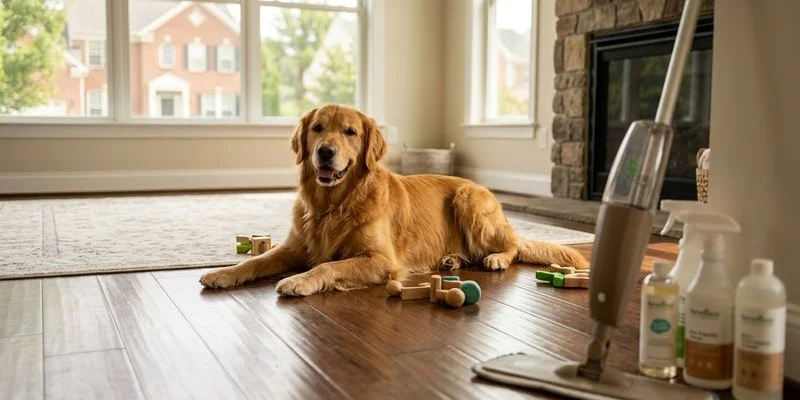
If you share your home with dogs, cats, or other furry family members, you have probably wondered whether the products used to clean your floors, counters, and bathrooms are safe for them. Pets are more vulnerable to chemical exposure than most people realize. They walk on freshly mopped floors, lie on cleaned surfaces, groom themselves constantly, and are much closer to the ground where residues accumulate.
For pet owners in Salisbury and across the Eastern Shore, understanding which cleaning products are safe and which pose risks is an important part of responsible pet ownership. At Miss Spotless Cleaning, our green cleaning service was designed with families in mind, and that includes the four-legged members.
Why Pets Are More Vulnerable to Cleaning Chemicals
Pets face greater chemical exposure risks than humans for several reasons that are easy to overlook.
Direct surface contact. Dogs and cats spend significant time lying on floors, carpets, and furniture. Their skin absorbs chemical residues that linger on these surfaces after cleaning. Unlike humans who wear clothing and shoes, pets have nearly full-body contact with cleaned surfaces.
Grooming behavior. Cats are meticulous groomers, licking their paws and fur multiple times per day. Dogs also lick their paws regularly. Any chemical residue on floors or surfaces transfers to their fur and then directly into their mouths during grooming.
Lower body weight. A chemical concentration that might cause mild irritation in a 150-pound adult can cause serious toxicity in a 15-pound cat or a 30-pound dog. Pets receive proportionally higher doses relative to their body weight from the same environmental exposure.
Respiratory sensitivity. Pets, especially birds, cats, and brachycephalic dog breeds (pugs, bulldogs, boxers), are highly sensitive to airborne chemicals. Volatile fumes from conventional cleaners can irritate their airways and, in some cases, cause serious respiratory distress.
Common Cleaning Chemicals That Are Toxic to Pets
Several ingredients found in standard household cleaners pose specific dangers to animals:
Phenols. Found in many disinfectants and pine-scented cleaners. Cats are particularly susceptible because they lack the liver enzymes needed to metabolize phenols. Exposure can cause liver damage, tremors, and in severe cases, organ failure.
Ammonia. Present in glass cleaners and all-purpose sprays. Ammonia fumes irritate respiratory passages and can trigger asthma-like symptoms in sensitive animals. Since pet urine also contains ammonia, the scent can confuse house-training efforts.
Chlorine bleach. While effective as a disinfectant, bleach residues on floors and surfaces can cause gastrointestinal irritation if ingested during grooming. Fumes can irritate eyes and respiratory systems.
Formaldehyde. Found in some cleaning products and air fresheners. It is a known carcinogen for both humans and animals, and chronic low-level exposure is a concern in homes where these products are used regularly.
Isopropanol. The active ingredient in many antibacterial cleaners. Even small amounts can cause vomiting, disorientation, and respiratory depression in dogs and cats.
Essential oil caution. While many green cleaning products use essential oils as natural fragrances, some essential oils are toxic to cats, including tea tree oil, peppermint, and citrus oils in concentrated form. Always check that green products are specifically formulated to be safe around pets.
What Makes a Cleaning Product Truly Pet-Safe?
Not every product labeled “natural” or “green” is automatically safe for pets. Here is what to look for:
Plant-based surfactants. These clean effectively without leaving toxic residues. Look for products that use coconut-derived or corn-derived surfactants rather than petroleum-based chemicals.
No volatile organic compounds. Products that are VOC-free will not release harmful fumes that irritate pet respiratory systems.
Quick-drying formulas. Products that dry quickly leave less residue for paws to contact and tongues to ingest.
Third-party safety testing. Look for EPA Safer Choice certification or specific claims about pet safety that go beyond vague marketing language.
Fragrance-free or pet-safe fragrance. Unscented products are the safest option. If the product is scented, verify that the fragrance ingredients are safe for the specific types of pets in your household.
Practical Tips for Pet-Safe Cleaning
Floor Cleaning
Floors are the highest-risk surface for pets. When mopping, use a pet-safe, plant-based floor cleaner and allow the floor to dry completely before letting pets back into the area. If your pet is particularly sensitive, a final rinse with plain water after cleaning can remove any remaining residue.
Carpet and Upholstery
Carpets trap dirt, pet dander, and allergens that affect both pets and humans. Regular vacuuming with a HEPA filter vacuum is the safest first step. For deeper cleaning, choose enzymatic cleaners that break down organic matter naturally rather than chemical-based carpet shampoos. Our guide on cleaning tips for pet owners in Salisbury covers additional strategies for managing pet hair and odor.
Kitchen and Bathroom
These high-traffic areas need effective sanitization, but you do not need toxic chemicals to achieve it. Hydrogen peroxide-based sanitizers are effective against bacteria while being safe for pet environments. Vinegar-based solutions work well for everyday surface cleaning, though they should not be used on marble or natural stone.
Air Quality
Avoid aerosol sprays and plug-in air fresheners, which release synthetic chemicals continuously. Instead, open windows for ventilation when weather permits and use baking soda for natural odor absorption. Eastern Shore homes benefit from the coastal breeze, and fresh air circulation is one of the most effective ways to maintain good indoor air quality for pets and people alike.
Why Professional Green Cleaning Makes Sense for Pet Owners
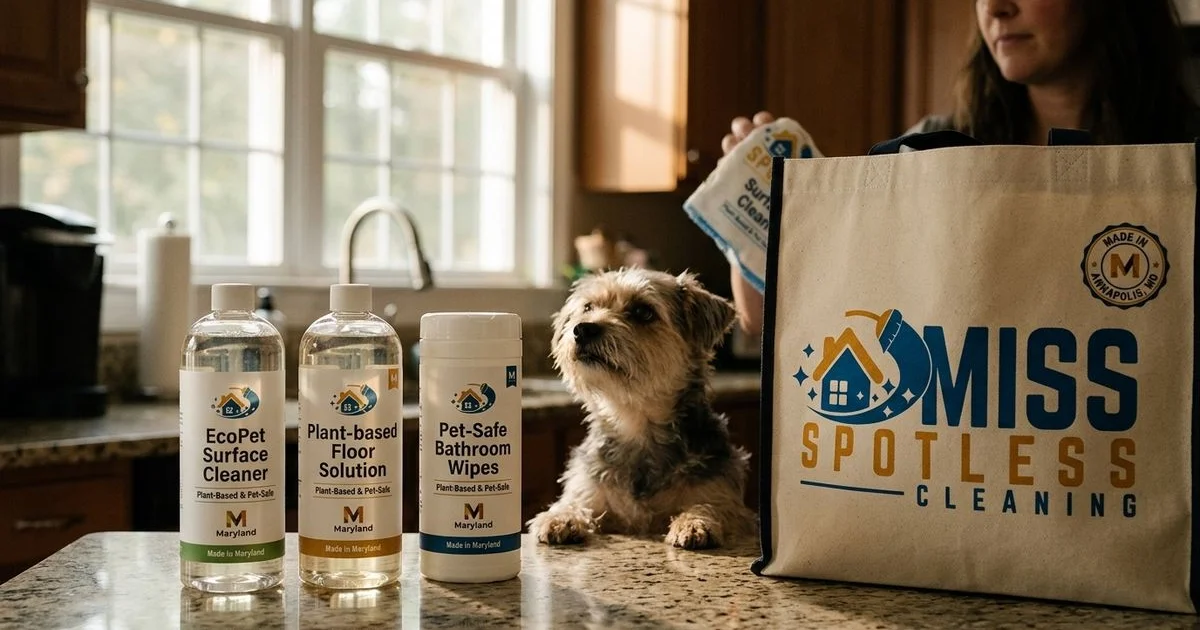
Managing pet-safe cleaning on your own requires research, product selection, and constant vigilance. Professional green cleaning services eliminate the guesswork. At Miss Spotless Cleaning, our team uses products that have been specifically vetted for safety around pets and children, while still delivering the thorough clean that Salisbury homes need.
Our house cleaning service addresses the unique challenges of pet-owning households, including pet hair removal, odor management, and attention to areas where pets spend the most time. We understand that your pets are family, and their safety is part of every cleaning plan we create.
Keeping Your Home Clean and Your Pets Healthy
A clean home and a pet-safe home are not mutually exclusive. With the right products and practices, Eastern Shore pet owners can enjoy spotless living spaces without worrying about their animals’ exposure to harmful chemicals. The key is choosing cleaning products intentionally and working with providers who share your commitment to pet safety.
Ready to make your Salisbury home both spotless and pet-safe? Contact Miss Spotless Cleaning to learn about our green cleaning options designed with your entire family in mind.
Need Professional Cleaning Help?
Get a free, no-obligation quote from Miss Spotless Cleaning. We serve Salisbury, MD and the Eastern Shore.
Get a Free Quote