Medical Facility Cleaning Standards: What Maryland Practices Need to Know
Kerley Papalia
Operations Manager
Medical Facility Cleaning Standards: What Maryland Practices Need to Know
Medical facilities have cleaning requirements that go far beyond what a standard office needs. If you operate a medical practice, dental office, veterinary clinic, or therapy center in Salisbury or the Eastern Shore, you are held to specific regulatory standards for cleanliness and infection control. Falling short can put patients at risk, expose your practice to liability, and potentially jeopardize your licensing.
At Miss Spotless Cleaning, we provide specialized commercial cleaning and sanitizing and disinfecting services for medical facilities throughout the Salisbury area. In this guide, we will cover the key standards you need to understand and how to ensure your facility meets them consistently.
Why Medical Facility Cleaning Is Different
A standard office accumulates dust, fingerprints, and general grime. A medical facility accumulates all of that plus biological contaminants, pharmaceutical residues, and potentially infectious materials. The consequences of inadequate cleaning in a healthcare setting are not just cosmetic. They can lead to healthcare-associated infections, which affect hundreds of thousands of patients annually across the United States.
The cleaning protocols for medical environments address three levels of concern: general cleanliness, infection prevention, and regulatory compliance. Each requires specific products, procedures, and training that go beyond conventional commercial cleaning.
Key Regulatory Standards
OSHA Bloodborne Pathogens Standard
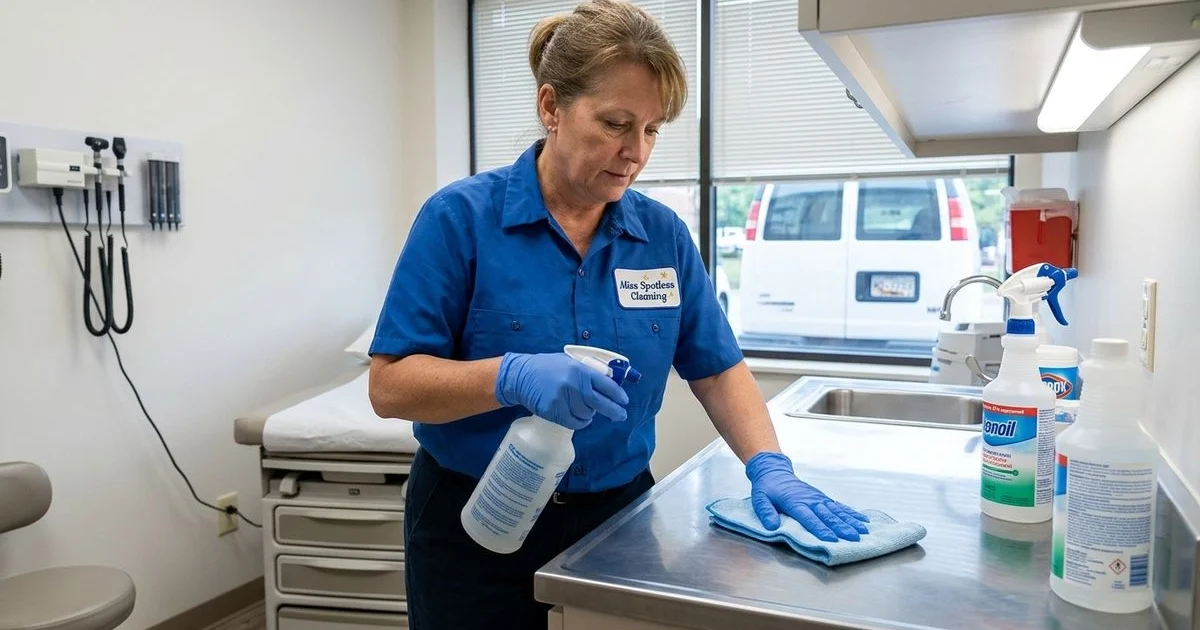
The Occupational Safety and Health Administration requires medical facilities to maintain an Exposure Control Plan that includes specific cleaning and decontamination procedures. Any surface contaminated with blood or other potentially infectious materials must be cleaned and decontaminated using EPA-registered disinfectants effective against bloodborne pathogens.
This standard applies to examination rooms, treatment areas, laboratories, and any space where exposure to blood or bodily fluids is possible. Your cleaning team must be trained on proper handling, personal protective equipment use, and waste disposal protocols.
CDC Infection Prevention Guidelines
The Centers for Disease Control and Prevention publishes comprehensive guidelines for environmental infection control in healthcare facilities. These cover surface disinfection frequencies, product selection, air quality management, and laundry handling. Key CDC recommendations include:
- Using EPA-registered hospital-grade disinfectants on all patient-contact surfaces
- Cleaning and disinfecting high-touch surfaces at least daily, and more frequently in high-risk areas
- Following specific protocols for terminal cleaning of rooms after patients with known infections
- Maintaining proper ventilation and air filtration standards
Maryland Department of Health Requirements
Maryland has its own set of regulations for healthcare facility cleanliness that work alongside federal standards. The Maryland Department of Health conducts inspections of licensed healthcare facilities and can cite deficiencies related to environmental cleanliness. Maintaining compliance requires documented cleaning schedules, product logs, and staff training records.
For practices on the Eastern Shore, inspections may be less frequent than in the Baltimore metropolitan area, but the standards are identical. It is better to maintain consistent compliance than to scramble before a scheduled or surprise inspection.
Critical Cleaning Areas in Medical Facilities
Examination and Treatment Rooms
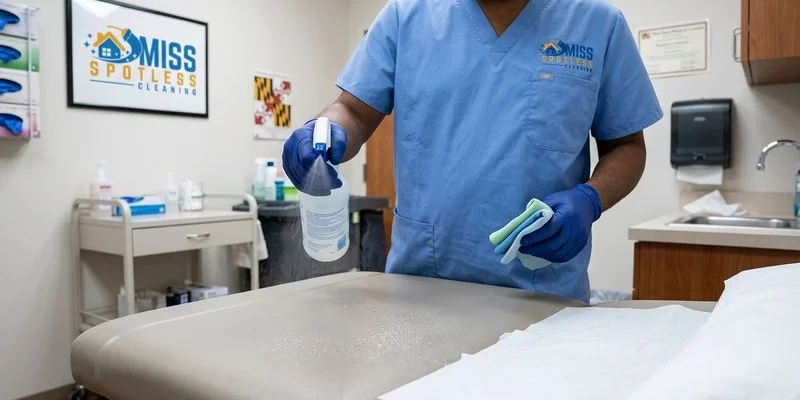
These rooms require cleaning between every patient and a thorough terminal clean at the end of each day. Between-patient cleaning focuses on the exam table, any equipment used, and high-touch surfaces like door handles and light switches. End-of-day cleaning covers floors, walls within splash zones, and all surfaces.
Waiting Areas and Reception
Waiting rooms present unique challenges because they serve a high volume of potentially sick individuals. Chairs, armrests, magazines, check-in counters, and door handles need frequent disinfection throughout the day. Consider also the air quality in waiting areas where sick patients may be coughing or sneezing.
Restrooms
Medical facility restrooms need more rigorous and frequent cleaning than standard commercial restrooms. This includes hospital-grade disinfection of all surfaces, proper restocking of supplies, and attention to any biohazard potential.
Floors and Carpeting
Hard floors in clinical areas should be cleaned with hospital-grade disinfectant daily. Carpeted areas, common in waiting rooms and administrative offices, require regular vacuuming with HEPA filtration and periodic deep extraction cleaning. Spills involving bodily fluids on any floor type require immediate response with appropriate disinfectants.
Choosing the Right Cleaning Partner
Not every commercial cleaning company is equipped to handle medical facility requirements. When evaluating cleaning providers for your Salisbury practice, look for these qualifications:
Training and certification. Staff should be trained in bloodborne pathogen handling, OSHA compliance, and proper use of hospital-grade disinfectants. Ask about their training program and how often it is updated.
Product knowledge. The company should use EPA-registered, hospital-grade disinfectants with documented kill claims for relevant pathogens. They should understand contact times and proper application methods.
Insurance and compliance. Verify that the cleaning company carries adequate general liability insurance and workers compensation coverage. Medical facility cleaning carries higher risk, and proper coverage is essential.
Documentation. A good medical cleaning provider maintains detailed logs of cleaning activities, product usage, and quality inspections. These records are valuable during regulatory audits and can demonstrate your commitment to maintaining standards.
Consistency. Medical cleaning cannot be hit-or-miss. Your provider should have systems in place to ensure the same thorough standard is met every single visit, with supervisory oversight and quality checks.
Building a Compliant Cleaning Program
The most effective approach for Maryland medical practices is to establish a documented cleaning program that covers daily tasks, weekly deeper cleaning, monthly specialized services, and annual deep cleaning. This tiered approach ensures nothing is overlooked while keeping costs manageable.
Your cleaning partner should work with you to develop this program based on your specific facility layout, patient volume, and service types. A small dental practice in Salisbury has different needs than a multi-provider medical office, and the cleaning program should reflect those differences. For an overview of what commercial cleaning typically costs in the area, our guide on commercial cleaning costs in Salisbury provides detailed pricing ranges.
If your Eastern Shore medical practice in Salisbury or surrounding areas needs a cleaning partner that understands healthcare standards, contact Miss Spotless Cleaning to discuss a customized program for your facility.
Need Professional Cleaning Help?
Get a free, no-obligation quote from Miss Spotless Cleaning. We serve Salisbury, MD and the Eastern Shore.
Get a Free Quote